A lot of game AIs cheat. They read your inputs. They get a faster car. They know where the hidden tile is. Ours do not. Every CPU on this site plays by the same rules you do. It sees only what you can see. What changes with difficulty is how steady its hands are, and how much of the strategy it plays. Here is how each one works, in plain words.
The one rule
A CPU may only use public information. If you can see it on screen, the CPU may use it. If you cannot, neither can the CPU. That rule decides everything below. It also means a CPU can be wrong in the same ways you are. That is the point.
Penalty Kicks: it watches your aim, late
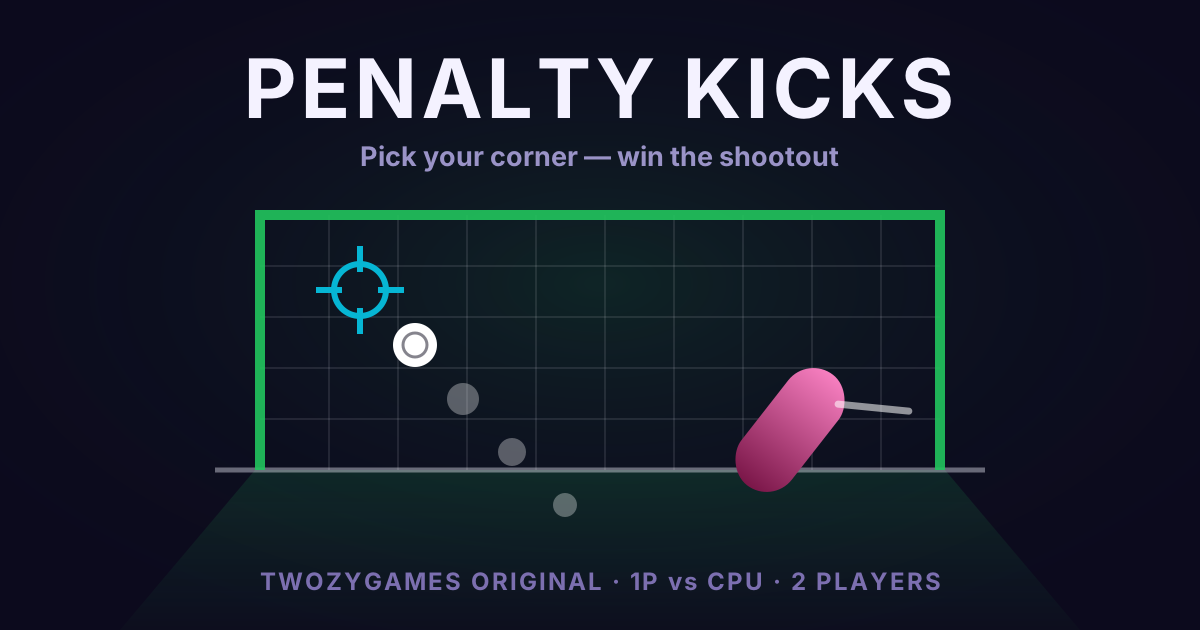
Your crosshair is public. The keeper can see it, and so can the CPU. But it does not read your key presses. It samples the crosshair with a delay. On Easy the delay is long, and it guesses wrong on purpose. On Hard the delay is short. Aim late and the CPU dives at where you were.
Cannon Duel: it simulates the shot
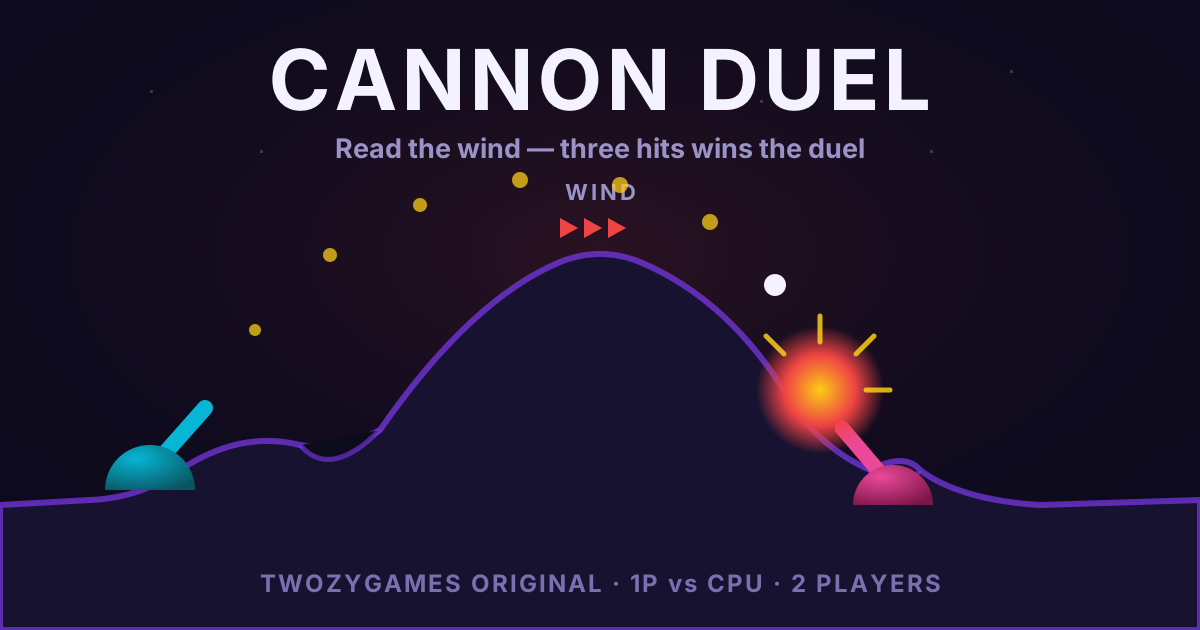
The CPU does not solve the maths. It tries candidate shots against the real terrain and the real wind. Then it aims with human-style error. Easy only believes one fifth of the true wind. That is why it sometimes shells itself. Hard reads the wind well, and its aim had to be made sloppier twice, because it kept hitting three times in a row.
Tank Duel: it flanks, it does not teleport
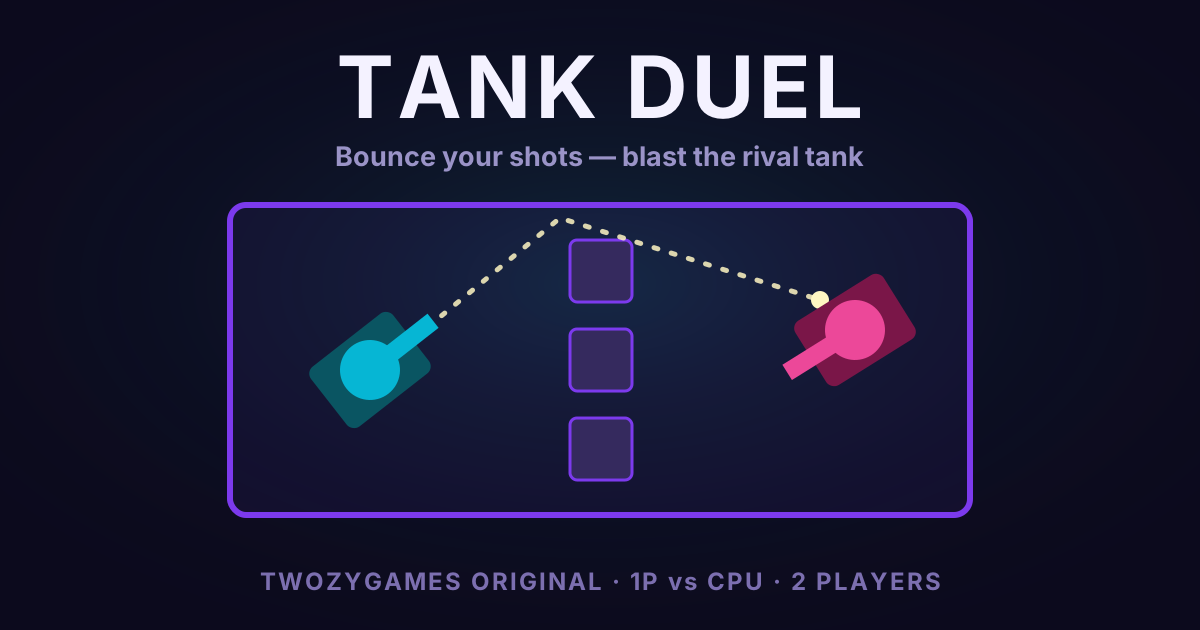
Our first CPU drove nose-first into cover and stalled there when it lost sight of you. It now picks a side and swings wide around the block until it sees you again. It cannot bank a shot off a wall. You can. That is your edge.
Sleight: it has a real, limited memory

The CPU remembers tiles it has seen. Three on Easy, five on Normal, eight on Hard. When the board shuffles, it can follow one, two or three of the swaps. Everything else in its memory goes stale. Exactly like yours. Sometimes it turns over two tiles with full confidence and gets nothing.
Fuse: it sees the ghost, not your hands

Every difficulty sees positions, burnt tiles and the ghost. Nothing else. It gets the same two hops per pass you do. Easy commits early. Hard holds its bluff to the last quarter of a second, and keeps a note of where you tend to guard. A human would do the same.
Vector: the same nine moves you get

Every turn the CPU chooses from the identical nine candidate moves you see. Easy chases progress and slips one move in five. Normal and Hard use an exact turns-to-finish table. Normal slips 15% of the time, Hard 5%. None of them is perfect on purpose. A flawless racer is not a rival, it is a clock.
Flock: same speed, same sheep

The CPU shepherd moves at your speed. The sheep fear it the same way they fear you. Easy and Normal get behind the sheep and push, with slow reactions and aim error. Hard herds clusters, which is the policy that won our balance tests. If Hard beats you, it out-positioned you.
The Triple Crown: simulated hands

Scull's CPU rows through the same stroke and stamina rules. It has its own timing jitter, so it catches crabs. Skip's CPU charges the same gauge and genuinely splashes. Sluice's CPU reads the same gate clocks under the same lane-change delay. Difficulty changes how steady the hands are. It never changes the physics.
Why we bother
A cheating CPU teaches you nothing. You cannot learn from an opponent that breaks the rules, because the lesson is not real. An honest CPU is a practice partner. Everything it does, you could do. When it beats you, there is a reason, and you can find it. That is also why every CPU here has three settings, and why Easy is never a speed cut. It is a worse reader, a slower hand, a shorter memory. The same game, played worse.