Game picks, guides, and useful info
The games we designed, coded and tested ourselves: duels, races, board games and co-op puzzles for two people on one screen. Free, instant, no download.
No downloads needed — the 10 best 2 player browser games for 2026, hand-picked for couch play and same-keyboard sessions. Play instantly in your browser.
One keyboard, two players, zero setup. Full guide to same-keyboard 2-player browser gaming — controls, ergonomics, troubleshooting stuck keys, and recommended titles.
Board games are the fairest way for two people to play. Nobody wins because their hands are faster. Here are our own turn-based originals for one laptop or one phone: four in a row with a tilting board, flick curling, a memory game that shuffles itself, and more.
Play browser games on your phone with no install: how to start, where your saves live, what works on touch, two players on one phone, and quick fixes.
Seven practical fixes for the most common browser game problems: lag, stuck loading screens, missing sound and low frame rates. They are ordered by impact, so start at number one. Plus two bonus tips for two-player and phone play.
A browser game runs inside your web browser with no download and no account. This guide explains how they work, how they replaced Flash, what kinds exist, and how to tell a good game site from a careless one.
Free browser games that start in seconds with nothing to install and no account. Four of our own two-player games first, then hand-picked catalogue games across action, puzzle, sports, casual and mobile.
Volleyball, basketball, penalty kicks, air hockey, rowing and curling for two people on one keyboard. Our own sports games first, then two light duels from the catalogue. Every one is free and starts in seconds.
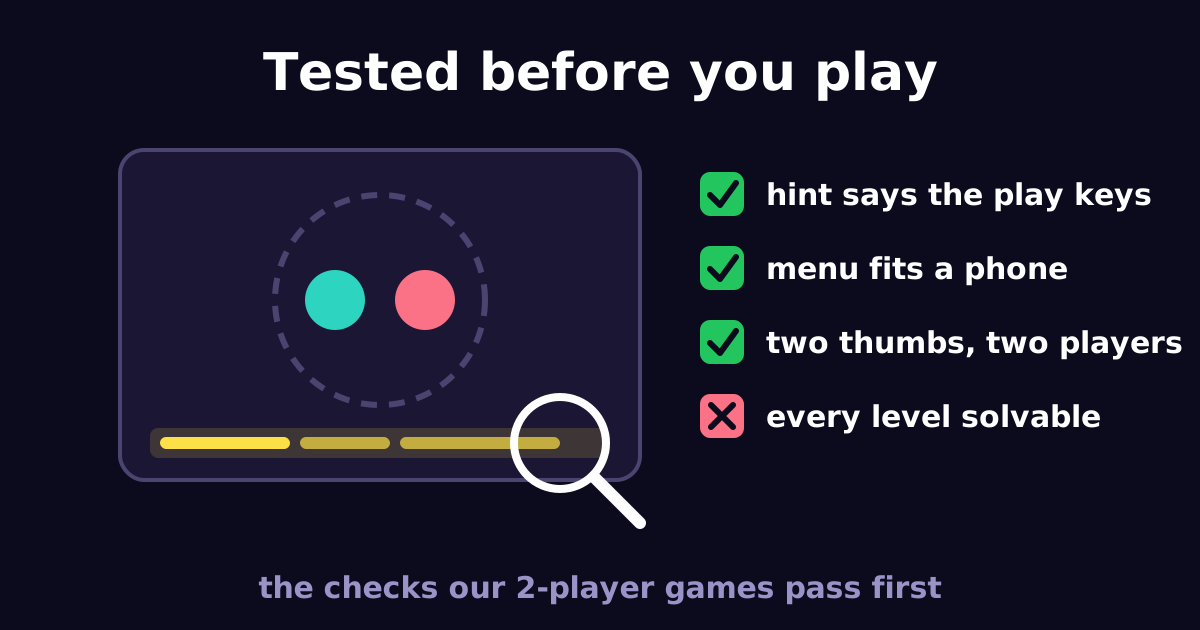
Every original runs through eighteen automated checks before it ships. They read the control hints on screen, press every key, tap every phone layout and try to solve every level. Here is what they caught that a human playtest missed.
Free, non-violent, account-free browser games that kids enjoy and parents can check in five minutes. Grouped by age from 4+ to 8+, plus four of our own games with no ads inside them.
Games for two people who do not play at the same level. Co-op games nobody loses, turn-based games with no reflex gap, and a few light duels for when you are ready to compete. All free, all on one laptop or one phone.
Free browser games perfect for a 5-minute break, grouped by how a session ends. Our own turn-based duels come first — a match ends before your coffee cools — then ten quick third-party picks.
Does the first player win too often? We simulate thousands of matches before a game ships. The real fairness numbers behind Tilt, Button, Spill, Sleight and Wake — and the fixes that actually worked.
Sudoku, match-3 fighters, jigsaw hybrids, and more — the 10 best free browser puzzle games for 2026. Plus our own co-op puzzle originals: solve with a partner, not against one.
Every solo mode on TwozyGames has a CPU opponent. None of them peek at your keys, and none of them get a faster car or a bigger hand. This is how each one actually decides, what makes Easy easy, and the one rule we use to keep them honest.
The best free mobile browser games for 2026, with no app store, no download and no account. Our own phone-first games come first, including four that two people can play on one phone. Then ten hand-picked titles flagged as phone-friendly.
Four quick questions, one game. How much time do you have? What are you playing on? What mood are you in? Is one of you much better than the other? Answer them and this page points at one of our own two-player games. No list to scroll.
The fewer the buttons, the fairer the first five minutes. Here are our own two-player games sorted by how many keys each player really needs: none, one, or two. Good for a partner who never plays, for a kid, or for anyone who hates learning controls.
The full guide to Scull, Skip and Sluice, our three-leg racing series, by the people who coded it. Why Scull is really about one tank of strength. Why a long hop in Skip lands looser. How to read a rival’s shadow in Sluice one second before it locks. And why no single skill can win all three legs.
Three action games we built ourselves, plus the top 10 free browser action games from around the web — ragdoll brawlers, 2D fighters, and couch 2P picks. All free, all in your browser, no download.
The complete strategy guide to Fuse, our mirror bomb rally: why standing still is often the strongest move, which tiles to burn first, how to bluff inside the final half-second of the fuse, and what changes when the ring tightens at pass twelve.
For every game that ships on TwozyGames, more ideas die in testing first. Meet a few of them: the dodgeball that was secretly a reaction test, the rope duel where the throw never worked even once, and the auction that passed every measurement — then lost to two real humans. Each one taught the games you can play today.
The complete strategy guide to Spill, our ink-cascade duel: why the corner opening is right but a corner-only plan lost every simulated game, the feeding mistake the CPU's own evaluation punishes hardest, how to time the endgame avalanche, and the measurement behind the missing first-player handicap.
The complete strategy guide to Bloom, our growth territory duel: how to count rings so you know who wins every patch before it is decided, when a bramble wall is worth burning ground for, why mirroring lost 100% of simulated matches, and the measured 83% advantage behind the two-garden match structure.
The complete strategy guide to Vector, our turn-based grid racer: how to count a braking distance before you build the speed, why diagonals are almost free, when a deliberate crash-stop is the cheapest way out of a corner, and the measured 63–74% first-mover edge behind the two-heat match structure.
The complete racing strategy guide to Wake, written by the people who coded it: why the car in front is the only one that cannot charge, the exact reason a half-full slingshot is worth barely a third of a full one, why you do not have to chase every weave, and why being ahead in the wrong lane scores you nothing at all.
The complete strategy guide to Button, our flick curling duel: why the hammer schedule is public information from the first stone, the one power adjustment that lands you closer to the centre than the CPU is even aiming, why full power always throws your own stone away, and what the difficulty setting actually changes.
The complete strategy guide to Flock, our zero-button herding duel: why chasing measured no better than moving at random, the 81% edge that comes from driving groups instead of singles, how to read the panic ring before the sheep bolts, and the endgame arithmetic of a nine-sheep flock where five is a majority.
The complete strategy guide to Nerve, written by the people who coded and solved it: exactly where a push stops paying for itself, how far the scoreboard moves that answer, what the last-licks turn is worth in percentages, and what the three CPU settings really are.
The complete strategy guide to Quilt, the original with no timer and no way to lose: why joining patches is worth thirty times more than starting one, why the row you leave your partner is your real move, what the score names on the end screen actually measure, and how to play the endgame.
The complete co-op strategy guide to Yoke, written by the people who coded it: why agreeing is literally the fastest way to travel, the exact spot the body ends up when you both pull your own way, why letting go of your keys is the one thing that is not yielding, what the countdown ring is really showing you, and why the order you take the two targets in decides more than half the game.
The complete strategy guide to Sleight, written by the people who coded it: what the shuffle really costs you, why a wrong certainty is worse than knowing nothing, which tile to protect when three of them start moving, why a streak is worth more than its points, and exactly what the CPU can and cannot remember on each difficulty.
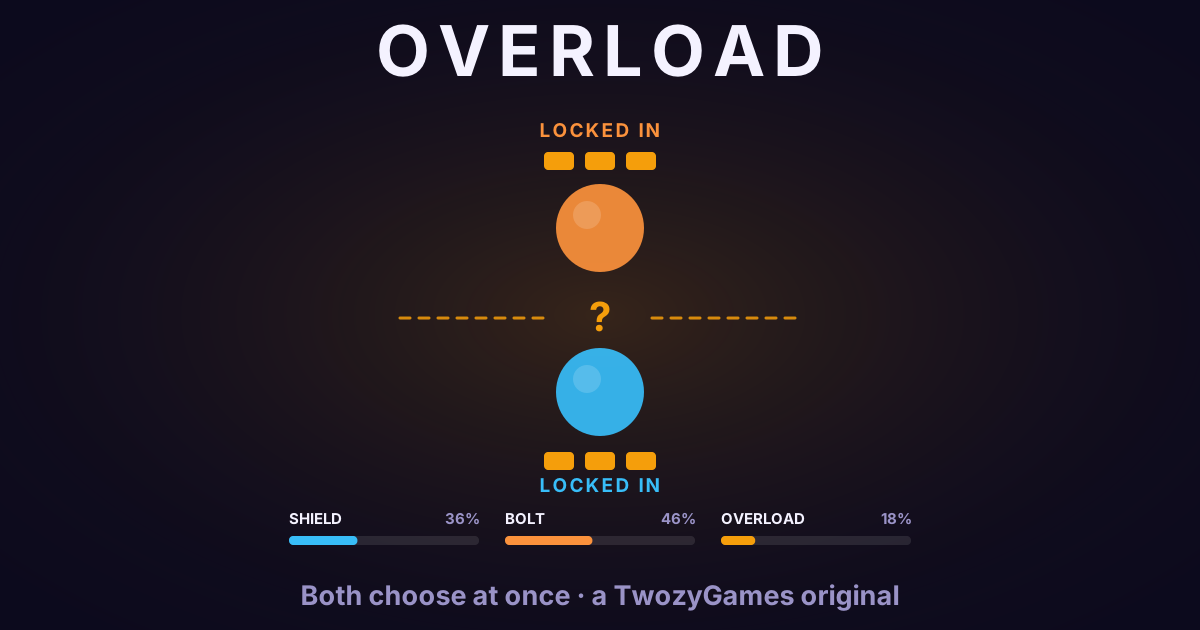
The complete strategy guide to Overload, written by the people who solved it before building it: the measurement that proves a simultaneous game can still reward skill, the full equilibrium table for every charge position, the one line in it that feels wrong and is right, and why the Hard CPU is beatable by design.
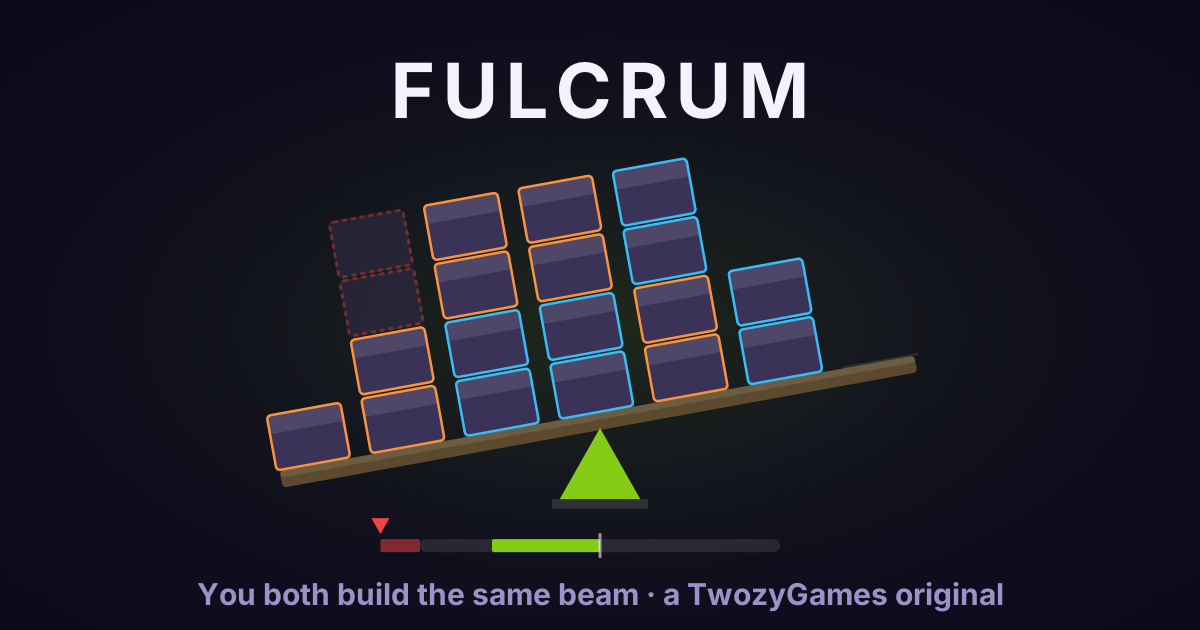
The complete strategy guide to Fulcrum, written by the people who coded it: the measurement showing that strong players lose by running out of room rather than by tipping the beam, why mirroring your opponent and hogging the centre both lose about two thirds of the time, the one placement that loses on move one, and exactly what each CPU difficulty does.
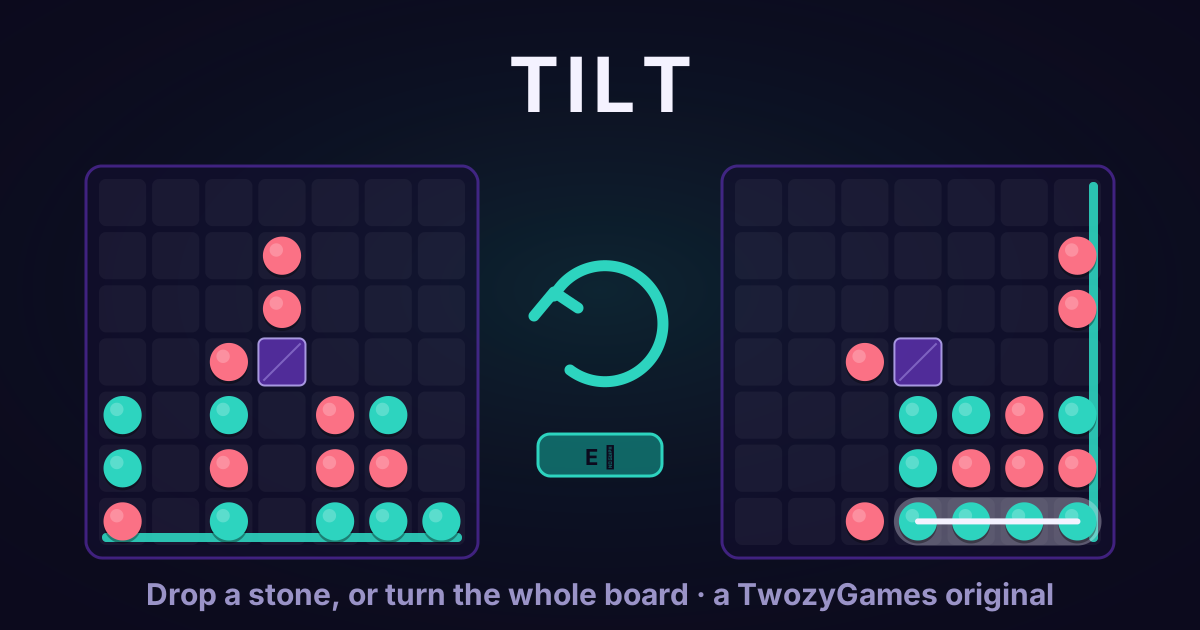
The complete strategy guide to Tilt, written by the people who coded it: why a tilt is worth exactly one stone, how to read a shape twice, the exact search depth of each CPU difficulty and the two-move threat it is blind to, the one-line rule that decides shared lines, and how each of the five boards changes the game.
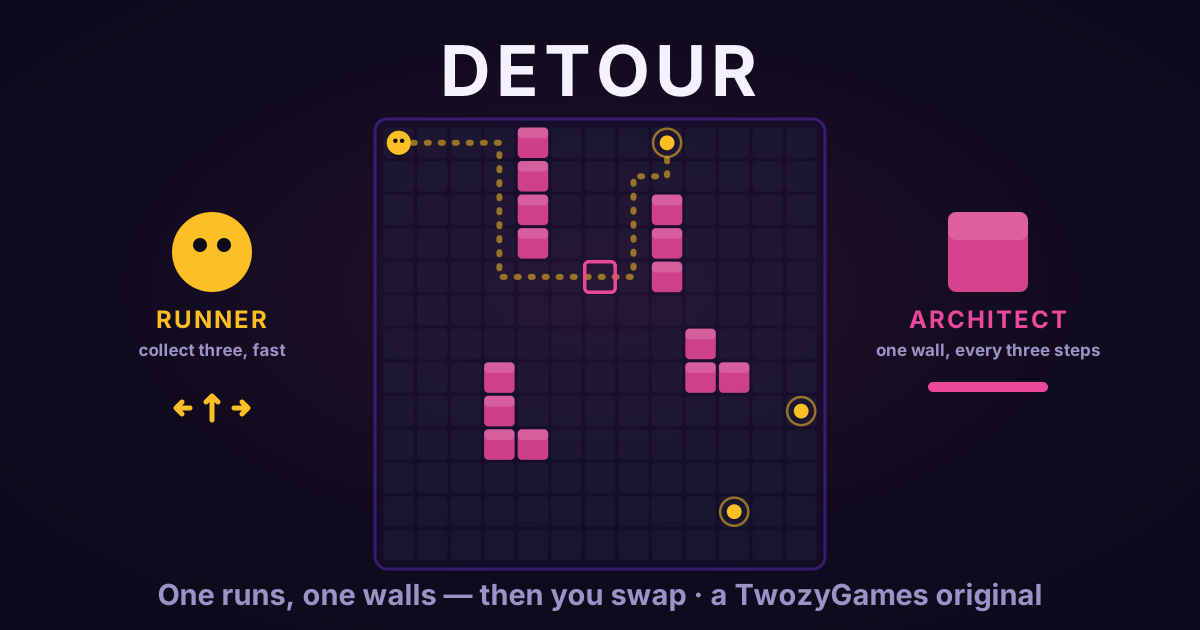
The complete strategy guide to Detour, written by the people who coded it: the measurement that says a careless wall costs the runner nothing at all, where the wall that hurts actually goes, why the seal rule fires about twice a leg, exactly what each CPU difficulty does, and the routing habit that beats a faster opponent.
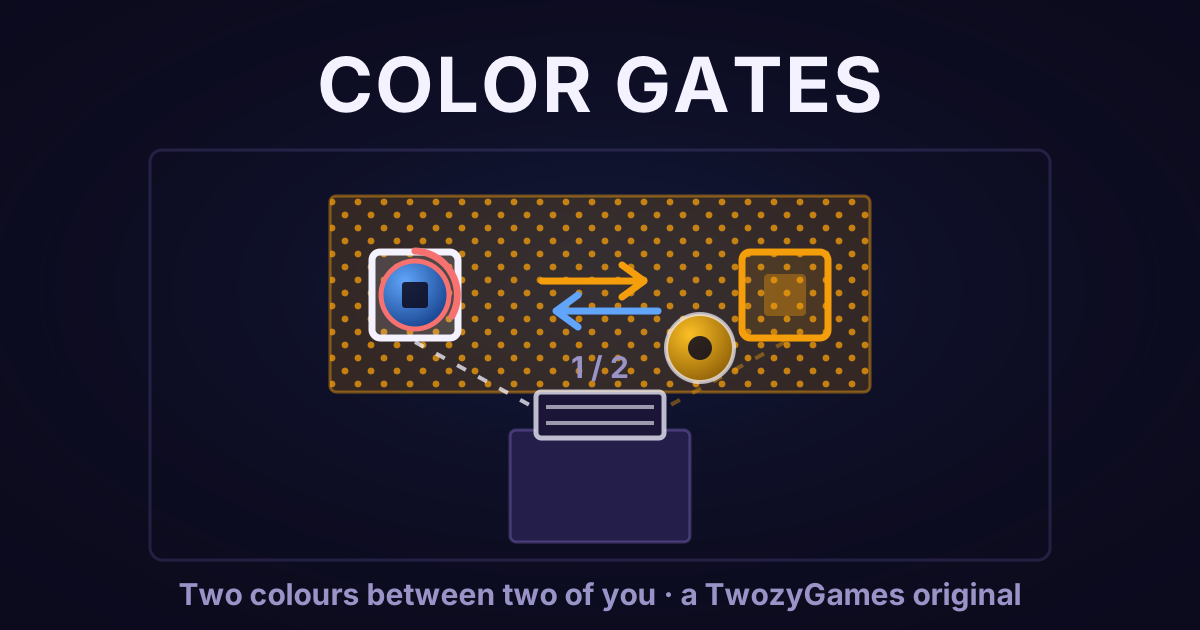
The complete co-op strategy guide to Color Gates, written by the people who coded it: the 0.15 seconds that make trading mandatory rather than clever, why standing on your own colour does not heal you, how far you can actually walk on the wrong colour, why the barred door does not need holding, and a walkthrough of all six levels.
Genuine same-screen co-op is rare in browser games. Here are the five that qualify — three of which we had to build ourselves — and why the list is short.
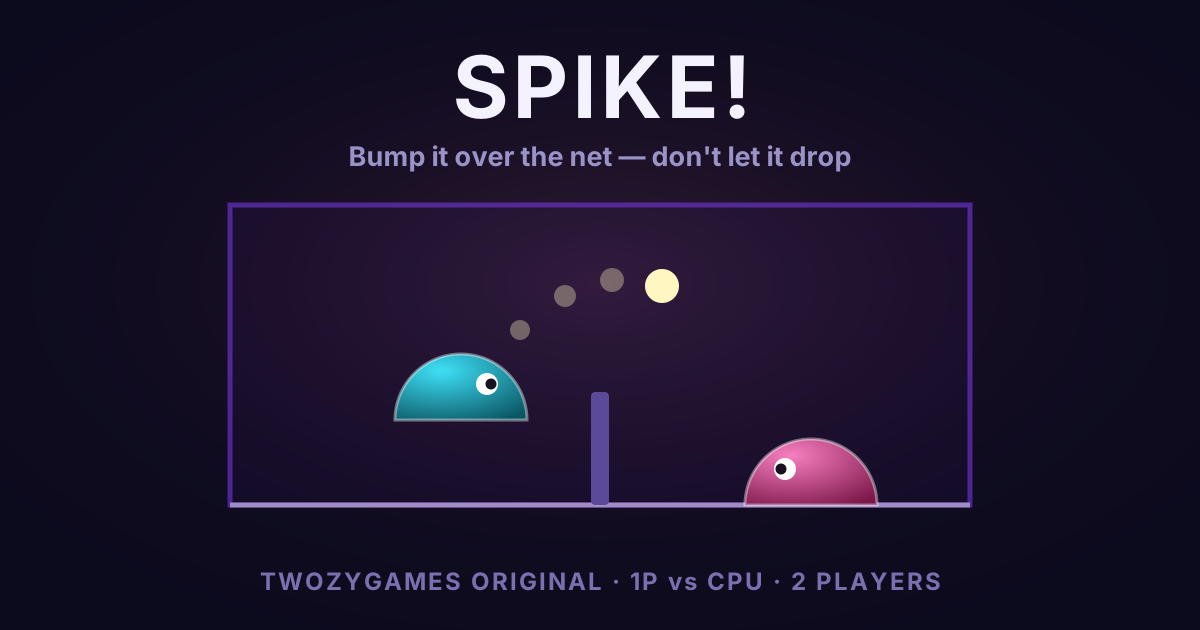
The complete strategy guide to Spike, written by the people who coded it: why the same jump produces a rocket or a floater depending on when you touch the ball, the one shot the CPU physically cannot jump for, why a ball below your head is already lost, and how to steer the ball with the side of your head.
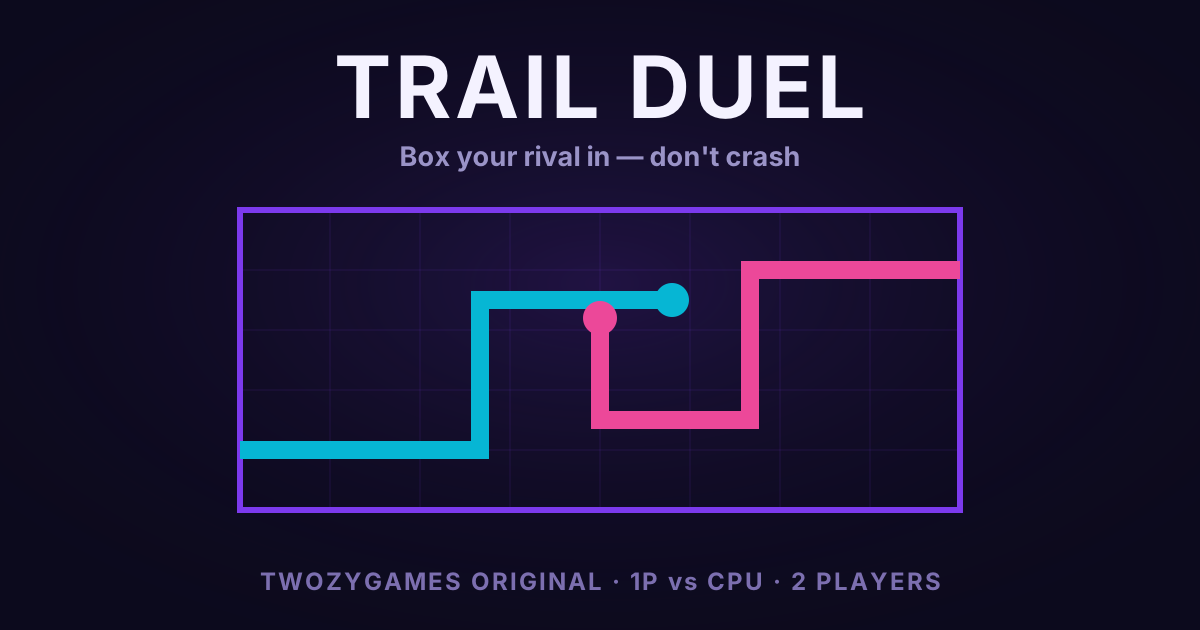
The complete strategy guide to Trail Duel, written by the people who coded it: why the CPU cannot tell a long corridor from a long dead end, how far ahead each difficulty actually looks, why Hard's habit of chasing you is a lever rather than a threat, and why a head-on collision is the worst outcome on the board.
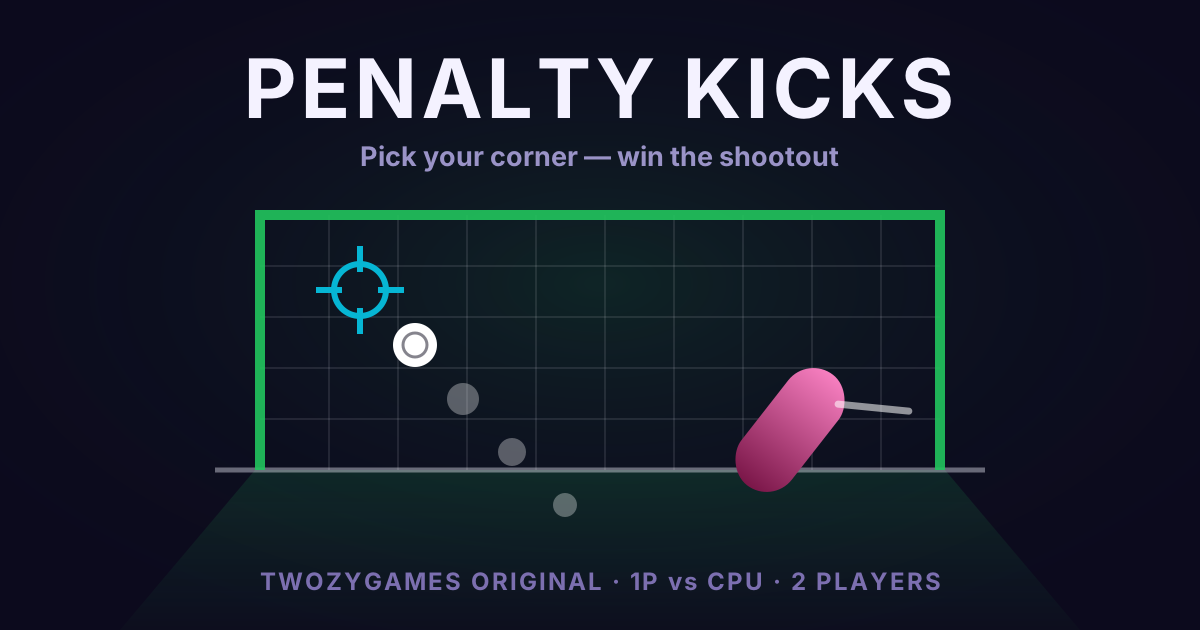
The complete strategy guide to Penalty Kicks, written by the people who coded it: why your crosshair is deliberately public, how to read the lag in the keeper's feet, why the red end of the power bar is a trap rather than a power-up, the one move that beats Hard, and how to read the CPU when you are the one in goal.
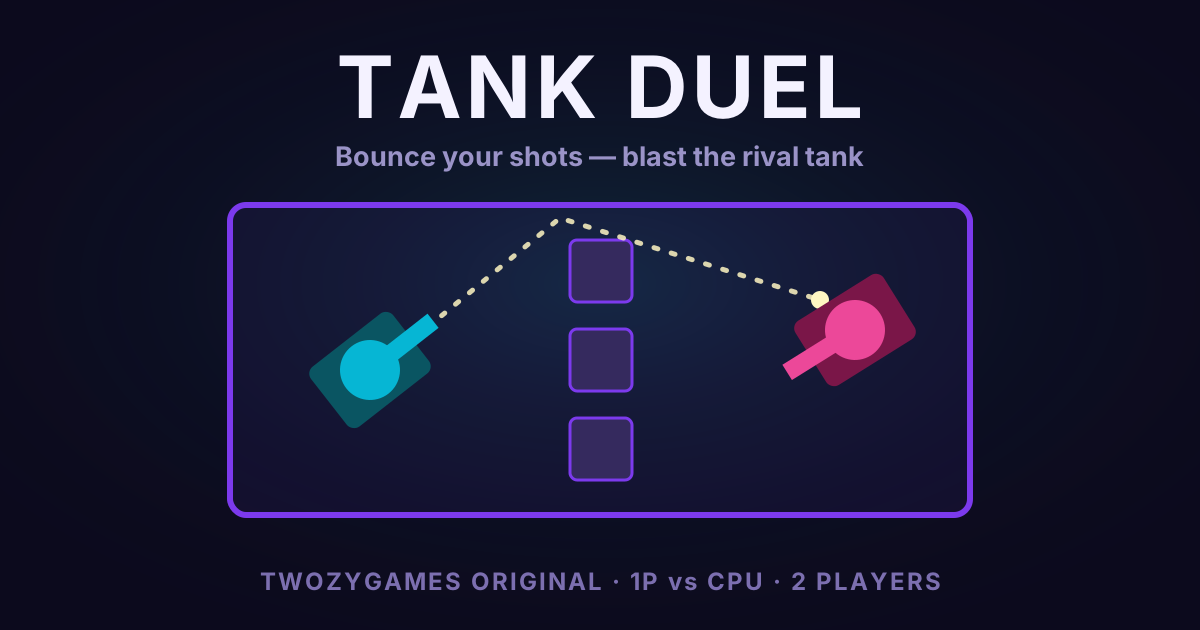
The complete strategy guide to Tank Duel, written by the people who coded it: why your shells ricochet twice and can kill you, the one weapon the CPU is structurally incapable of using, how the bot behaves when it loses sight of you, and what each difficulty actually changes.
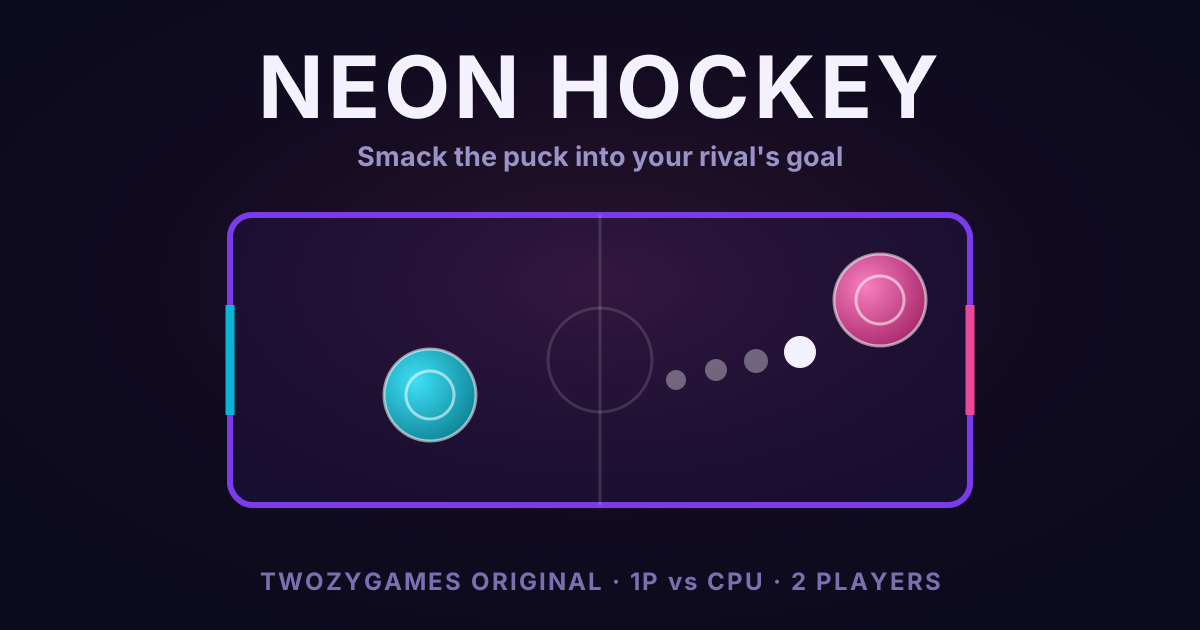
The complete strategy guide to Neon Hockey, written by the people who coded it: why swinging through the puck beats positioning, why rallies get faster on their own, the fixed defensive line the CPU never leaves, and why the walls are the weapon it cannot answer.
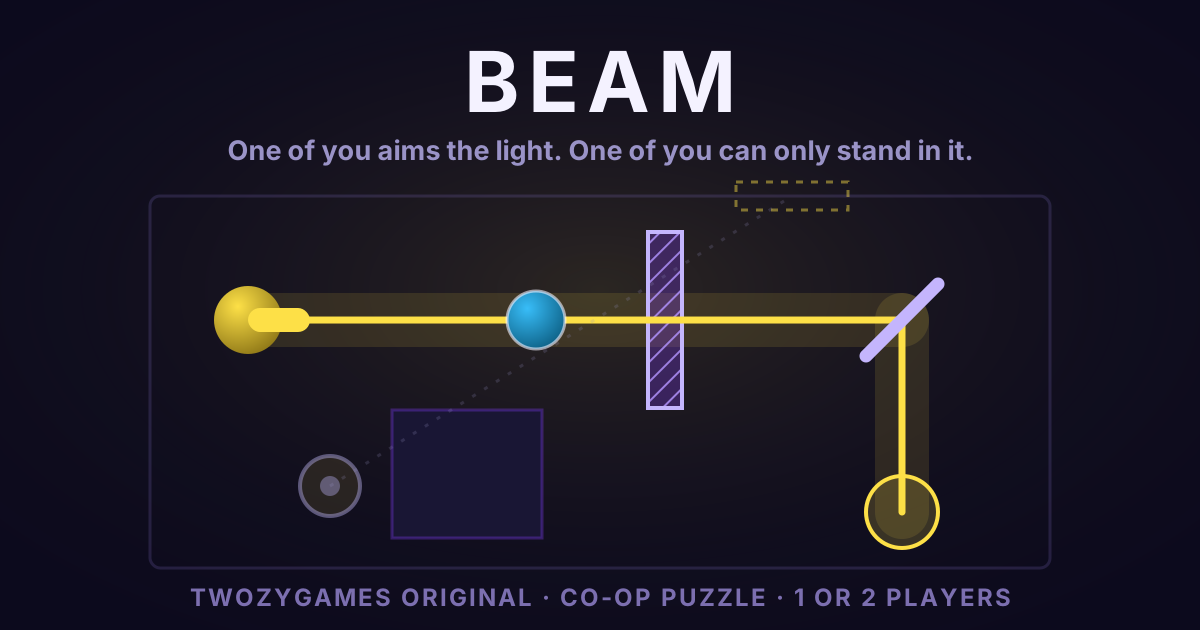
The complete co-op strategy guide to Beam, written by the people who coded it: why the bars cannot be broken, how to tell at a glance whether you are actually standing in the light, how the gate's own countdown bar turns an impossible trade into a plan, why dying never undoes your mirrors, and a walkthrough of all six levels.
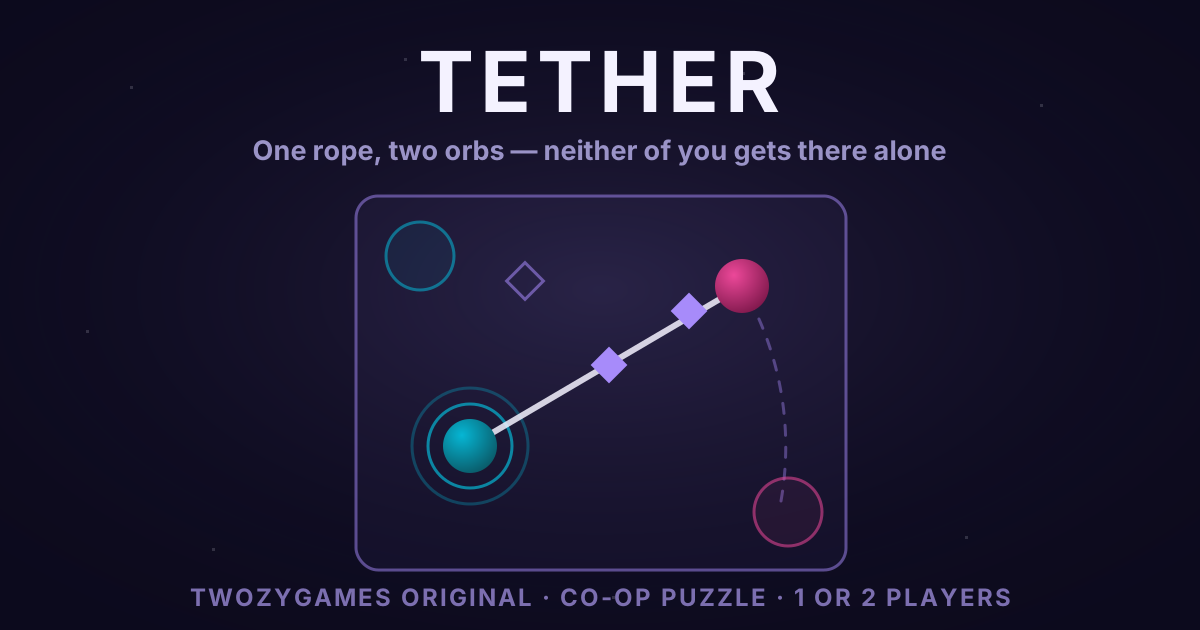
The complete co-op strategy guide to Tether, written by the people who coded it: why the rope lights nodes and your orbs never do, how anchoring turns the tether into a compass, the risk-order rule that saves whole runs, and a walkthrough of all six levels.
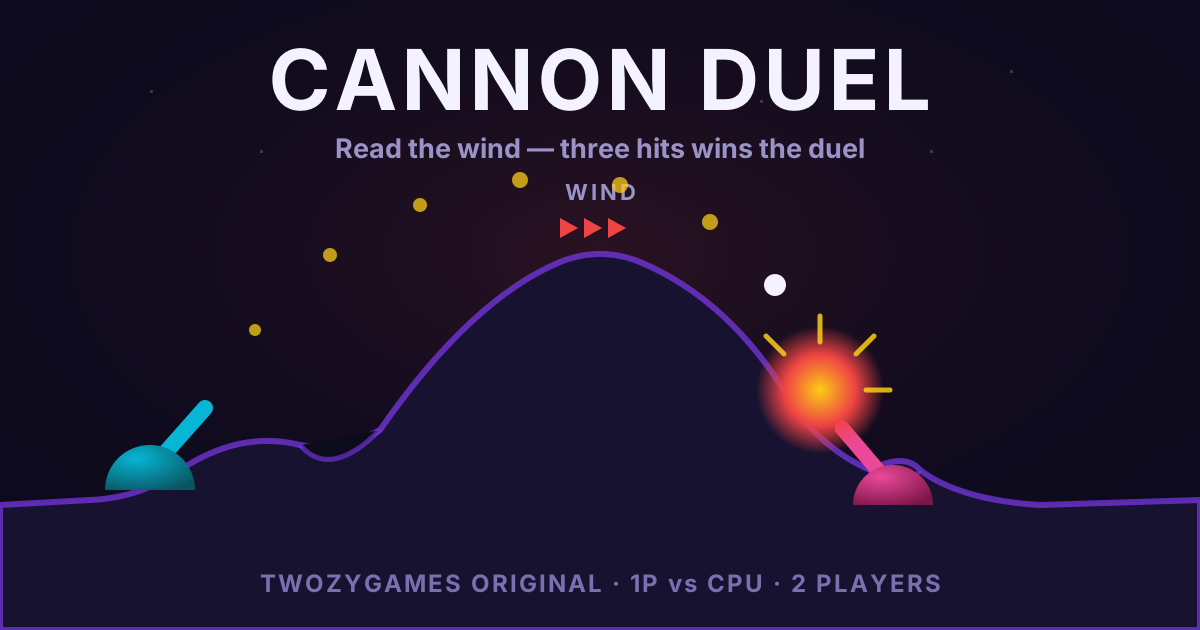
The complete strategy guide to Cannon Duel, written by the people who coded it: why wind punishes high lobs, why power — not angle — is the shot you actually have to get right, how craters change the map permanently, and exactly how much the CPU knows at each difficulty.
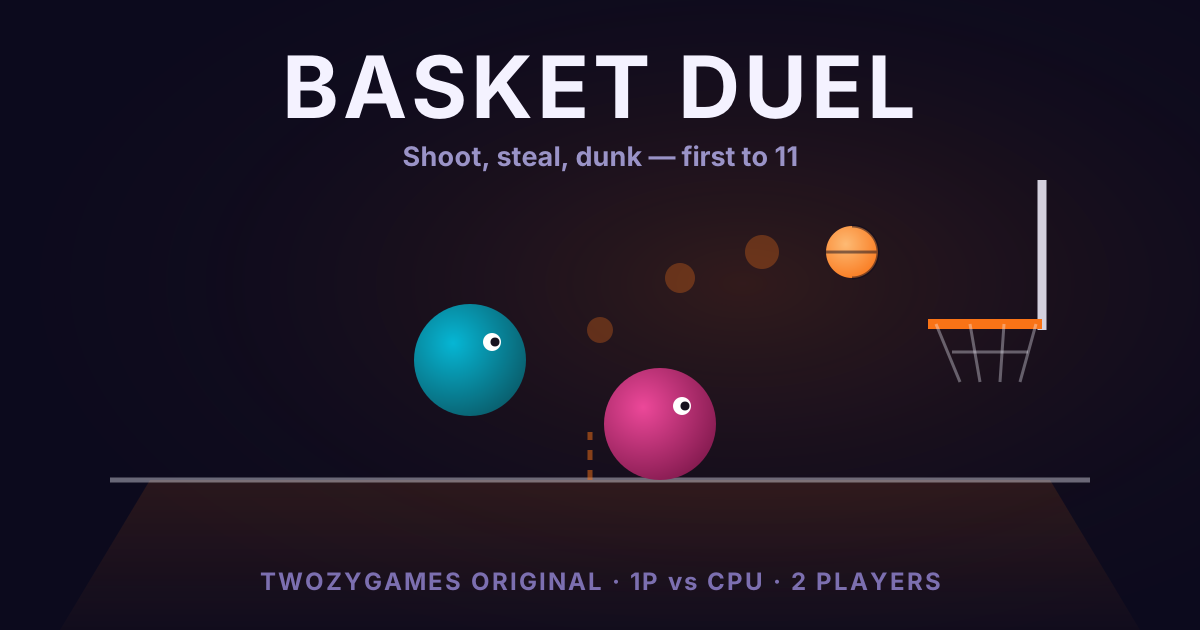
The complete strategy guide to Basket Duel, written by the people who coded it: why every shot should be a jump shot, what a defender in your face really costs you, the one shot in the game that cannot miss, and what each CPU difficulty is really doing.
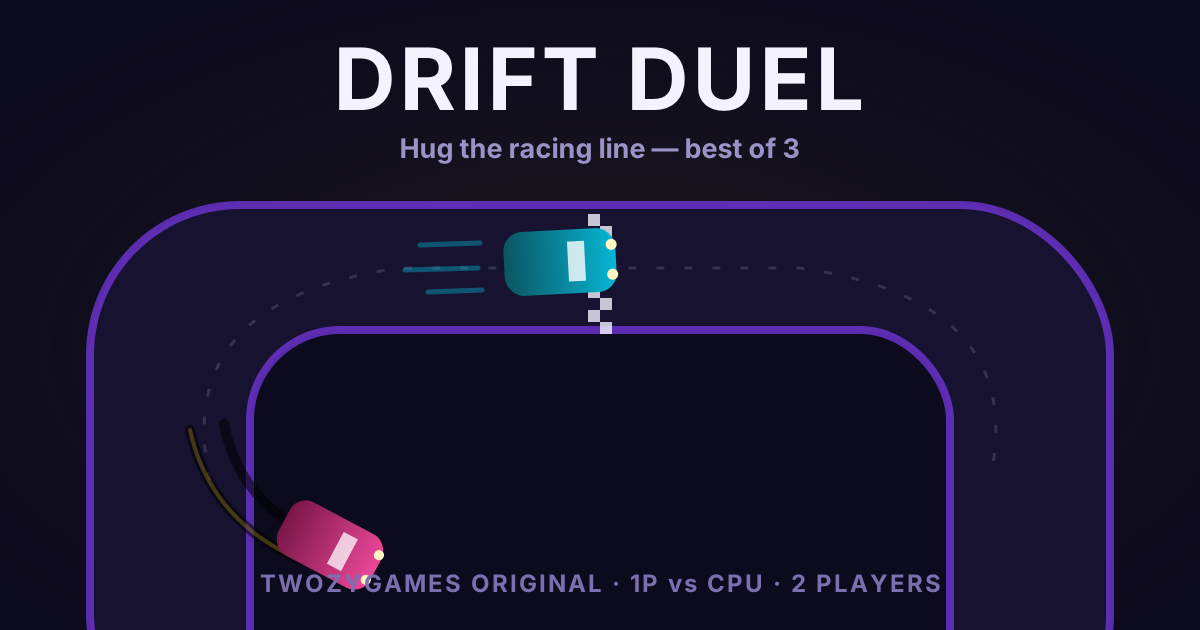
The complete strategy guide to Drift Duel, written by the people who coded it: why steering is your only brake, the racing line that actually works, stage tactics for Circuit, Hourglass, Tri-Oval and Chicane, and how to out-drive the Hard CPU.
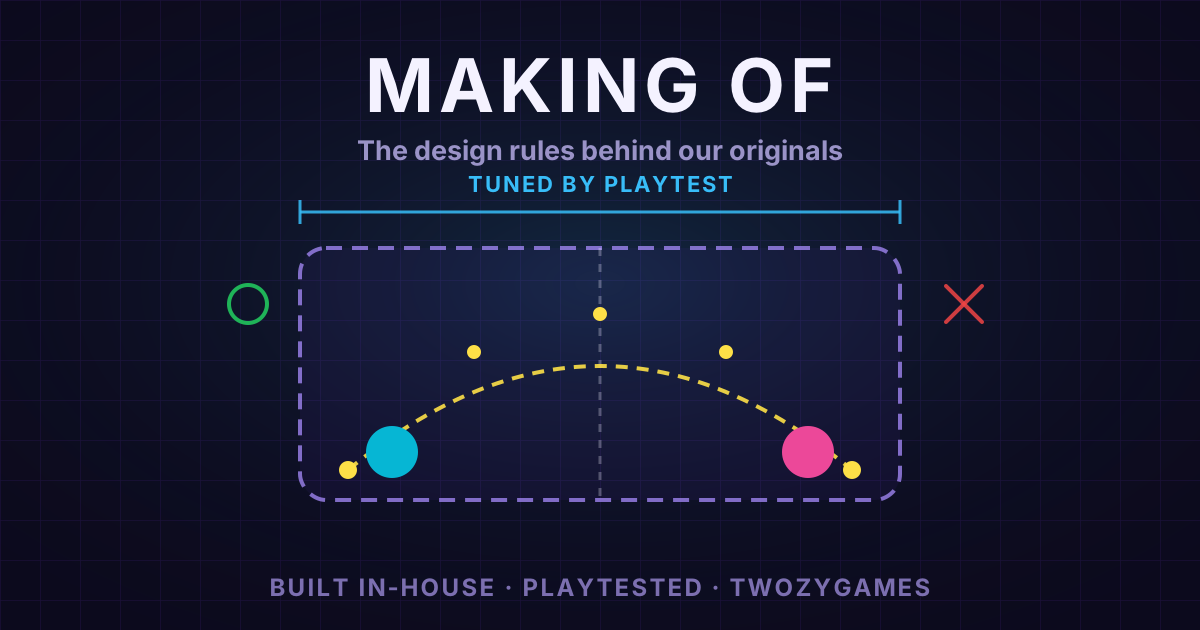
One file per game, physics that punish greed, and a CPU that isn't allowed to cheat — the design rules behind the TwozyGames Originals, and what playtesting taught us.
The complete strategy guide to Sumo Smash, written by the people who coded it: how the symmetric collision physics work, dash timing, stage-by-stage tactics for Shrink, Bumpers and Ice, and how to beat the Hard CPU.
The 7 best .io browser games you can play free in 2026 — territory control, chaos racing, survival arenas, and more. No account, no download, 3-second start.
Arcade speed, mobile drifting, 2-player split keyboard, and sim-lean simulators — the 10 best free browser racing games for 2026.
How browser gaming survived the death of Flash, why HTML5 games outpace their Flash predecessors, and what WebAssembly + WebGPU mean for the next decade.
Everything you need to know about co-op browser games — from what makes them work, to our top picks, to the communication habits that keep sessions fun.