Most two-player games lose someone in the first minute. Not because the game is hard. Because the controls are. One player knows where the keys are. The other is still reading the hint. So we count buttons. Every game on this page needs two keys per player or fewer. Several need none. Fewer buttons does not mean a shallower game. It means the game starts the moment both hands touch the keyboard.
Zero buttons: you only move
These games have no action key at all. Moving is the whole language. You cannot press the wrong thing, because there is nothing else to press.

In Flock you never touch the sheep. You scare them. Nine sheep run from whoever stands near them. Push five into your pen and the round is yours. The skill is angles, not speed. Get behind the flock and it goes where you want. That one idea beats wild chasing almost every time.

Yoke is a co-op game with a twist. One body, two owners. You steer left and right. Your partner steers up and down. A diagonal is something both of you have to say at once. There is no button on either side. Getting out of the way is not losing. Letting go of your axis is often the fastest way to the target.

Fuse is a bomb rally where you aim with your feet. The throw is automatic. It lands on the mirror of the tile you stand on. So moving is aiming, and standing still is a bluff. Two keys of direction per player, nothing else.
One button: hold it, or drag it

Skip is our one-button racing game. Hold to charge a hop. Release to fly. Hold longer and you fly further. You also land looser, because a fast gauge makes your release error bigger. The marker on the water shows exactly where you will land. That is the whole input, and it is enough for a three-round race.
 1–2PCasual
Button
Closest stone to the button takes the end — and the last stone alternates.
▶ Play NowButton is flick curling. One gesture, shared turn by turn. Drag back from your stone and release. A preview line shows exactly where the stone will stop. Closest to the button takes the end. The last stone alternates, which is why the game is fair.
Two keys: up and down, left and right

Wake is a slipstream race. Two keys move you between three lanes. There is no boost button. Sitting in the other car's wake fills a gauge. Swinging out spends it. The fastest seat on the track is second place.

Scull is rowing. Your two keys are your two oars. Press them in turn at a steady beat and the boat flies. Break the beat and you catch a crab. One tank of strength has to last the whole regatta. Spend it wisely.

Sluice is a gate run. Two keys change channel. Every gate runs on a clock you can read. One channel is always open. And the channel you swim in slams shut for your rival, one second before they arrive. Reading beats reflexes here, every time.
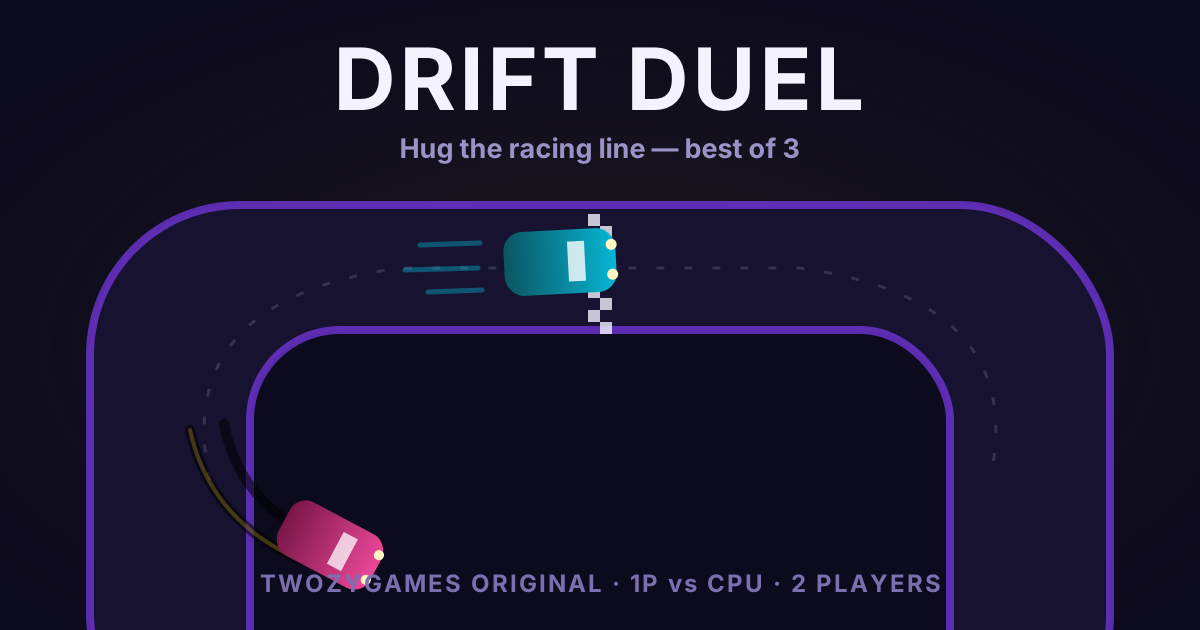
Drift Duel is steering only. The throttle is automatic. Steering is also the brake, because a hard turn scrubs speed. Left and right are the whole car. Best of three races.
Why fewer buttons works for couples
A big gap in game experience usually shows up in the hands first. One player has ten years of WASD. The other has none. Take the action keys away and that gap shrinks. What is left is reading, timing and nerve. Those are much more evenly spread. If you want games chosen for exactly that, see our couples collection. And if one keyboard for two people is new to you, the same-keyboard guide explains how the layouts work.