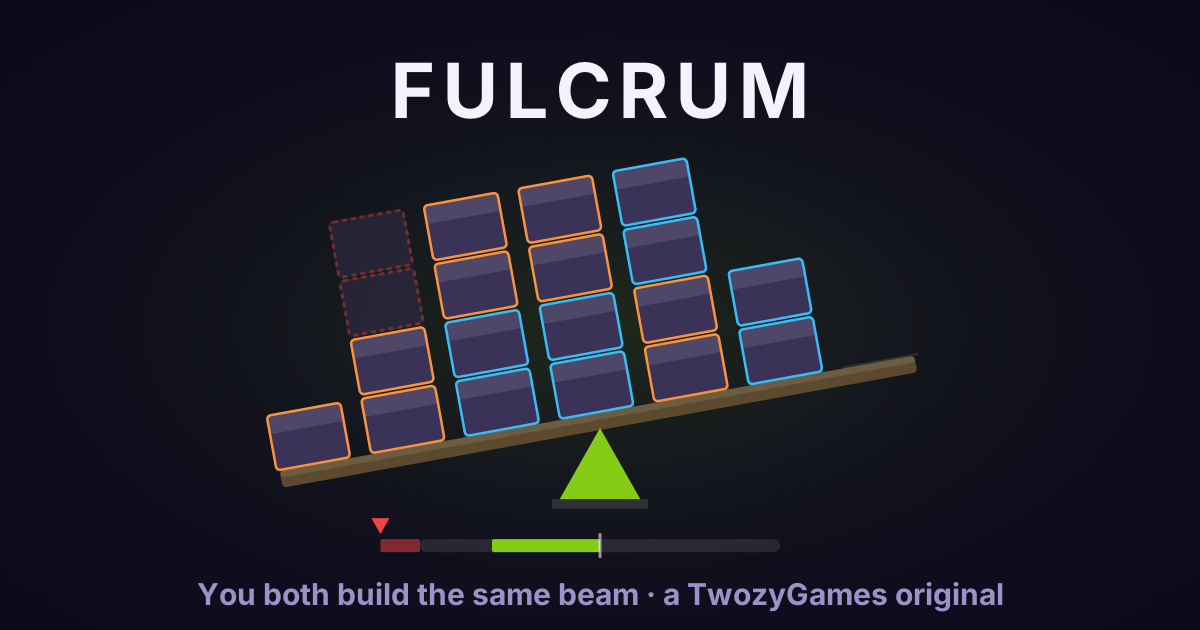
Fulcrum is the balance duel in the TwozyGames Originals lineup, and the one whose name is a little misleading. Two players share a single beam on a single pivot, taking turns to place blocks into seven slots, and the beam goes over on whoever pushed it too far. It looks like a game about keeping things level. We wrote the code and ran the searches that picked the rules, so we can say with numbers that it mostly is not.
The measurement that should change how you play
There are two ways to lose a round. Your placement tips the beam past its limit, or your turn arrives and none of the blocks in your hand fit anywhere. We played the game's own keep it level logic against itself for thousands of rounds and counted which ending actually happened:
- Beam tipped over: 51.5%.
- Ran out of legal moves: 48.4%.
So between two players of similar standard it is already close to a coin flip, and half of all rounds are lost by somebody who never came close to tipping anything. Now run the same test with a stronger player on one side. The game's Hard CPU beats that keep-it-level logic 55.2% of the time, and here is the part that matters — of the games it wins, 92.3% end with the opponent stuck, and only 7.7% with the opponent toppling the beam.
Read that as a rule: the better everyone plays, the less the beam matters. Balance is the constraint that stops you playing anywhere you like. Room is the thing you are actually competing for. The board holds seven slots, four units high, which is twenty-eight units in total, and a typical round consumes about seventeen of them before somebody loses.
Two instincts that feel right and lose
Both of these are the first thing people try, and we measured both against a plain keep-it-level opponent.
Mirroring: 33%
Answer every block your opponent plays with an identical block reflected to the other side of the pivot. The beam stays perfectly level forever. It is also a losing strategy, and it loses two games in three. The reason is that a mirror spends capacity exactly as fast as your opponent does while never once choosing where that capacity goes — you have handed them the entire structure of the board and kept only the promise not to fall over. Being safe is not the same as winning, and this is the cleanest demonstration of it in the game.
Hogging the centre: 33%
The middle slot sits directly over the pivot, so a block there applies no torque at all. It looks like free real estate, and a player who simply always takes the flattest slot available wins about a third of their games — essentially the same as mirroring. The centre is four units deep out of twenty-eight, and it is the most valuable four on the board precisely because they are the only ones that cost you nothing in balance. Spending them early means that later, when the beam has been dragged somewhere awkward, you have no cheap way to answer.
Treat the centre as your emergency fund rather than your income.
The arithmetic you actually need
The slots sit at lever arms of −3, −2, −1, 0, +1, +2, +3 from the pivot, and a block's torque is its size multiplied by that arm. Blocks come in sizes one and two. The beam goes over when the total passes five in either direction.
That gives you one fact worth memorising before your first game: a size-two block in either outermost slot is six. On an empty beam that is an instant loss on move one, and it stays lethal any time the beam is already leaning that way. The game does tell you — the ghost block turns red and the meter's preview tick sits past the end of its own bar — but it is worth knowing why rather than learning it by dying.
The practical version: the outer slots are where the leverage is, so they are simultaneously your most powerful tool and the easiest place to kill yourself. Filling one to its full height of four permanently removes the strongest lever on the board from both players. If you are ahead on room, that trade is good for you. If you are behind, you have just thrown away your own best instrument for making the position awkward.
How to spend a hand of two
You always hold two blocks and choose which to place; the one you use is replaced by a fresh draw. This is the rule that makes the game work at all — with a fixed block size the whole thing collapses into a solved parity puzzle — and it is also where most of your decisions live.
The habit worth building is to stop thinking of the size-two block as the awkward one to get rid of. It eats two units of a stack and applies double the torque, so dumping it burns your room twice as fast as playing a one. Since running out of room is how roughly half of rounds end, the player who quietly plays their ones and holds a two is very often the player who still has a legal move when it counts.
The exception is when a two is the only thing that reaches a correction you need, or when a stack is about to be closed off by your opponent and it is now or never.
What the CPU is actually doing
No difficulty gets extra information or extra placements. It draws from the same pile you do. Only the judgement changes.
- Easy picks at random among legal moves. It will tip the beam on itself given the chance.
- Normal always takes whichever legal move leaves the beam closest to level. This is the exact strategy the numbers above are measured against, and it beats random play more than nine times out of ten — but it never thinks about room, which is the hole you exploit.
- Hard looks one move ahead. For each option it counts how many safe replies you would be left with, averaged across both blocks you might draw, and takes the one that leaves you fewest. That is a capacity strategy rather than a balance one, which is why its wins look the way they do.
Hard is a one-move-deep heuristic and not perfect play, so it is beatable. For reference, genuinely perfect play beats the keep-it-level strategy 70.3% of the time, so there is a good deal of room above the hardest setting.
Playing the endgame
Late in a round the board is mostly full and the question stops being where is safe and becomes how many legal moves does my opponent have left. Two habits pay off here.
First, count their replies before you place. A slot that is one unit from full only accepts a size-one block; a beam leaning hard to one side makes an entire half of the board illegal for anything heavy. Those two constraints together can shrink an opponent's options to almost nothing while the position still looks calm.
Second, remember who the beam falls on. It only ever goes over on the player who placed the last block, so handing over a board that is balanced but nearly full is not a kindness — it is the strongest position in the game. They have to find a legal move, and every move they find makes the next one harder.
If you liked this one
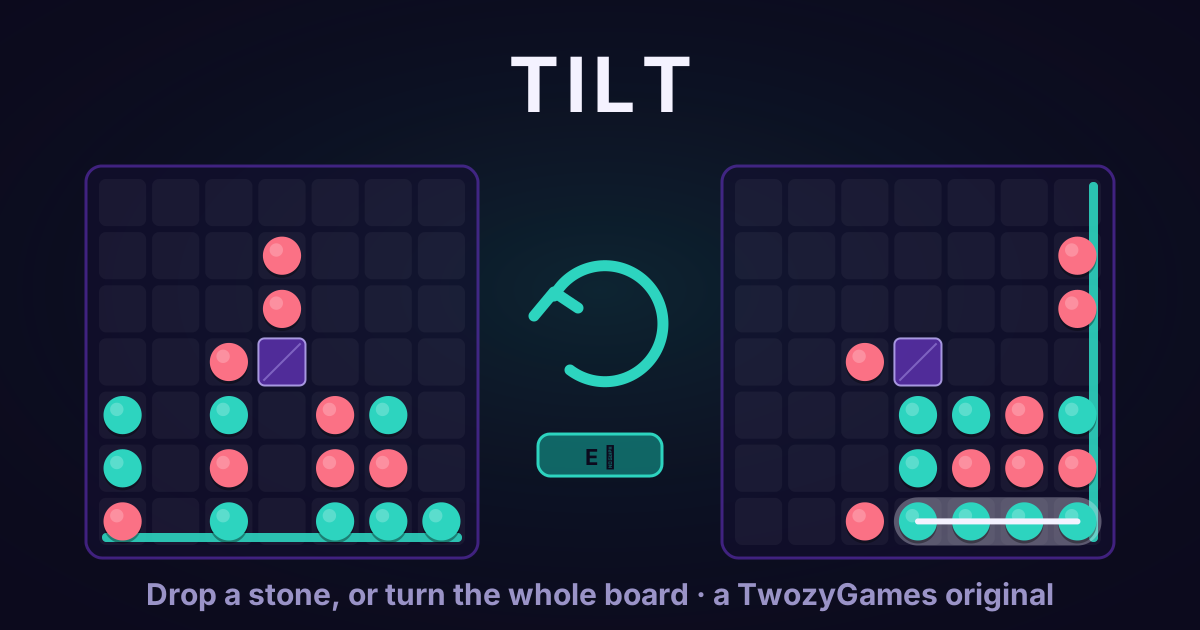
Fulcrum is the second turn-based original we have built, after Tilt, and the two make a natural pair: both are board games for two people sharing one device, and both were designed by measuring candidate rule sets before writing the game. The rest of the lineup is on the Originals hub, and our two-player picks cover the wider catalogue.