Overload
ORIGINALYou both choose at the same instant. Neither of you can react.
🎮 1 Player (vs CPU)
A charge · S shield · D bolt · F overload (or tap)
👥 2 Players (one keyboard)
P1: A S D F · P2: ← ↓ → ↑ — pressed at the same time
In-game: P pause · M sound · R restart · Esc menu · pick difficulty on the title screen.
Free · No download · No account · An original game made by TwozyGames.
🎮 About This Game
Overload is the one game in the TwozyGames lineup where both players act at the same instant. Everything else is either a reaction game or a turn game; here you each lock in one of four choices while the other is locking in theirs, and the exchange resolves the moment you have both committed. Neither of you can react to the other, because there is nothing to react to until it is already too late. You start with no charge. CHARGE adds one, up to three. SHIELD stops an incoming bolt. BOLT spends one charge and ends the round unless it hits a shield. And at full charge you can spend the lot on an OVERLOAD, which goes straight through a shield — the only thing in the game that does. Two bolts fired at the same instant cancel each other and the duel continues, so trading is not automatically fatal. Rounds are short, usually five to eight exchanges, and the first to three rounds takes the match. There is a three-second clock on each exchange; if you do not choose, you charge, because standing still is not one of the options.
🎯 How to Play
Player one uses A, S, D and F for charge, shield, bolt and overload. Player two uses the arrow keys — left, down, right and up for the same four. Both key sets are live at once, which is the whole point: you can press at the same time and neither of you can see which key the other went for. On a touchscreen each player taps their own row of buttons, and the key is printed on each button so nobody has to hunt for it. The two charge meters are public, and they are the entire read. You always know exactly what the other player can and cannot do — what you never know is what they have chosen this time. Solo plays against a CPU that gets no extra information and no extra actions: it sees the same two meters and commits at the same moment you do, without looking at your choice. Difficulty is only how well it mixes. Easy chooses close to random, Normal is loose, and Hard plays very near the solved strategy for the position. Hard is deliberately not built to exploit you — it plays soundly rather than trying to read your habits, which means a player who spots its patterns can beat it.
💡 Tips & Strategy
- ▸Read the two meters before you read anything else. What the right choice is depends almost entirely on the charge on the table, and the difference between positions is large — this is not a game where one habit works everywhere.
- ▸When they are charged and you are not, shielding is usually right, but stop doing it once they reach full charge. At three they can overload straight through a shield, so blocking buys you nothing and you may as well spend the exchange charging into it.
- ▸Do not sit on a full charge admiring it. An overload is the only thing that beats a shield, but it costs everything you have, so a shield you did not need to break is three exchanges of work thrown away.
- ▸Bolting into a bolt is not a disaster. The two cancel and you both drop a charge, so when you are both armed and both nervous, trading is often the calm move rather than the reckless one.
- ▸Charging is the only choice that is neither an attack nor a defence, which makes it the one you get punished for at exactly the wrong moment. If they have a bolt ready, charging is the move that loses the round.
- ▸Against a player who always shields when threatened, stop shooting and start charging. They cannot hurt you while they are shielding, and every exchange you spend charging brings you closer to the overload that goes through it.
- ▸Vary deliberately rather than randomly. A person who mixes at the wrong ratio for the position loses to a person who mixes at the right one, so the goal is not to be unpredictable everywhere but to be unpredictable in the way this particular position calls for.
🛠 From the Devs
This one was chosen by solving it before writing it, because the genre can be skill-free by accident. Rock-paper-scissors is optimally played at random, so a perfect player beats someone flipping a coin exactly half the time; build that and no amount of polish puts skill back in. So the simulator kept plain rock-paper-scissors as a control, and it duly came out flat, which is what says the measurement can tell shallow from deep. The first version had no overload, and it was dead. Two equilibrium players drew 99.3% of the time, rounds ran past fifty exchanges, and a three-line "shield whenever they are armed" rule could not be beaten by an exact best response at all. Shielding costs nothing, so nobody ever has to commit. Adding a shield-piercing shot at full charge, and making two simultaneous bolts cancel rather than kill both, fixed it completely: no draws at all, five to eight exchanges a round, and a best response beats naive play by ninety points or more. The number that actually mattered, though, was neither of those. The largest gap between the best mixes of two positions offering the same four choices is 0.83 on a scale where rock-paper-scissors scores zero. That is the measurement that says reading the board is worth something here, and it is the reason this design shipped and the first one did not.
❓ Frequently Asked Questions
If we both choose at the same time, is this not just rock-paper-scissors?
That was the risk, and it is why the rules were solved before the game was built. In rock-paper-scissors every situation is identical, so the best strategy is to pick at random and skill cannot exist. Here the two charge meters change what each choice is worth, and they change it a lot: comparing positions that offer the same four options, the best mix shifts by 0.83 on a zero-to-one scale, where rock-paper-scissors would score zero. You still want to be unpredictable, but unpredictable in a way that fits the position, and that is a skill you can get better at.
What does OVERLOAD actually do?
It is the only attack that goes through a shield, and it costs your entire charge of three. Without something that beats a shield the game does not work at all — we measured it, and two competent players simply shield forever, drawing more than 99% of the time. So the overload is not a bonus move, it is the thing that forces both of you to eventually commit. The cost is what keeps it honest: reaching three takes three exchanges, and spending it on a shield that was never going to be there is the most expensive mistake in the game.
What happens if we both fire at once?
The two bolts cancel, both of you lose the charge you spent, and the duel carries on. This is deliberate. If simultaneous shots killed both players, rounds would end in a draw far more often and the whole thing would feel like a coin toss; with cancelling, trading is a real and sometimes correct decision rather than a disaster. Two overloads cancel the same way.
Does the CPU see my choice before it picks?
No. It reads the same two charge meters you can see, and it commits at the same instant you do without any knowledge of what you pressed. Difficulty changes only how well it mixes: Easy is close to random, Normal is loose, and Hard plays very near the solved strategy for the current position. Hard is also deliberately not built to exploit you — it plays soundly rather than modelling your habits, so a player who notices its tendencies can beat it, and it will never punish a mistake harder than the position warrants.
More original games
📖 Related Guides
 Guide
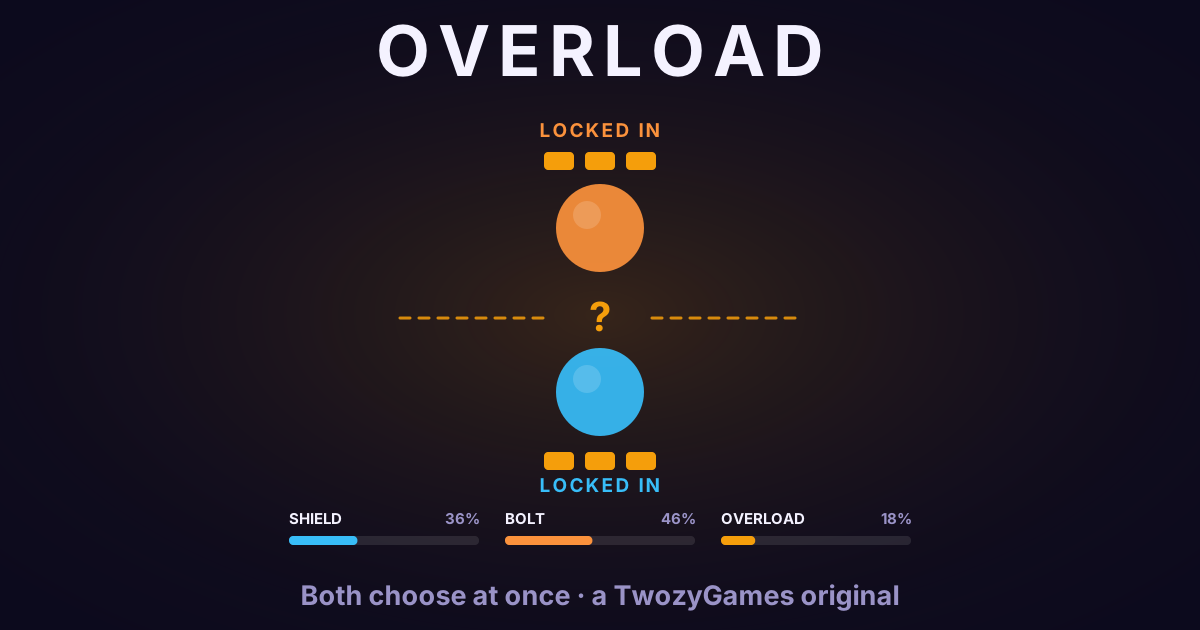
GuideOverload Strategy Guide: The Solved Table, and Why It Isn't Rock-Paper-Scissors
The complete strategy guide to Overload, written by the people who solved it before building it: the measurement that proves a simultaneous game can still reward skill, the full equilibrium table for every charge position, the one line in it that feels wrong and is right, and why the Hard CPU is beatable by design.
Read more →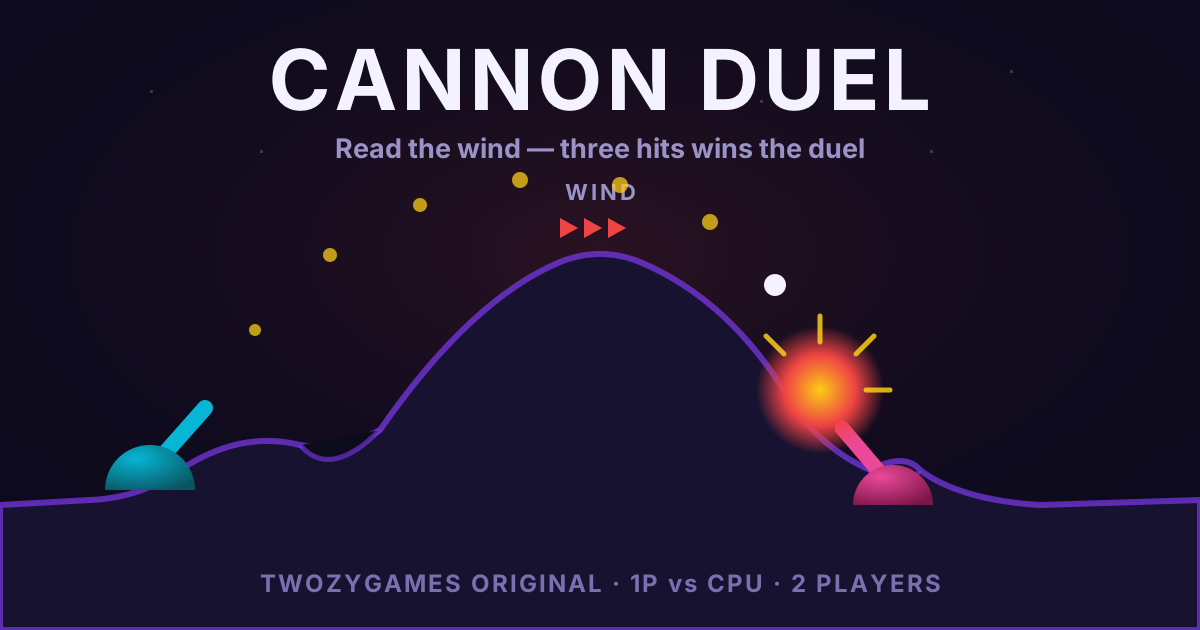 Guide
GuideCannon Duel Strategy Guide: Wind, Craters and How to Beat the Hard CPU
The complete strategy guide to Cannon Duel, written by the people who coded it: why wind punishes high lobs, why power — not angle — is the shot you actually have to get right, how craters change the map permanently, and exactly how much the CPU knows at each difficulty.
Read more → Picks
PicksTop 10 Best 2 Player Browser Games to Play With Friends in 2026
No downloads needed — the 10 best 2 player browser games for 2026, hand-picked for couch co-op and same-keyboard sessions. Play instantly in your browser.
Read more →